

Key Takeaways
- Electric air compressors offer quiet operation, energy efficiency, and low maintenance, making them ideal for indoor and industrial applications.
- They are well-suited for tasks in workshops, automotive repairs, food processing, and manufacturing, thanks to their emission-free design and reliable performance.
- Limitations include reliance on a stable power supply and reduced portability, which can restrict use in remote or off-grid locations.
- Electric models support environmental compliance in Perth and beyond by eliminating local exhaust emissions and helping reduce site carbon footprints.
- Compared to petrol compressors, electric air compressors are quieter, require less servicing, and have lower operating costs for fixed installations.
- For heavy-duty or mobile applications, petrol-driven units may still be necessary, but electric compressors remain the preferred choice for most indoor and light-to-medium industrial tasks.
Modern industrial applications increasingly favour quiet, efficient compressed air solutions that operate without harmful emissions. Electric air compressors deliver reliable performance for workshops, automotive repairs, and manufacturing facilities whilst maintaining low maintenance requirements and energy efficiency. Their emission-free operation ensures compliance with environmental regulations, making them ideal for indoor environments where traditional petrol-driven units cannot operate safely.
Understanding Electric Air Compressors
Electric air compressors use an electric motor to drive the compressor pump, converting electrical energy into pressurised air. Installers in Perth, WA, select these units for workspaces where low noise and simple plug-in operation are critical. Workshops, automotive garages, and small industrial sites prefer single-phase models for basic air tool use, while food processors and mining operations choose three-phase systems for constant, high-volume application.
Maintenance needs for electric models are low. Fewer moving parts minimise service frequency. Typical users replace air intake filters and drain condensate regularly. Professional services in Perth like Compressor Systems conduct safety checks, pressure vessel inspections, and electrical diagnostics, meeting AS/NZS 3788 standards.
System efficiency ratings depend on motor power (kW or HP) and air delivery capacity (L/min or CFM). Scroll and rotary screw designs, used in Perth industry settings, offer continuous delivery for tools or process systems, provided local power supply meets load requirements. Lubrication methods, such as oil-free and oil-lubricated pumps, support hygiene priorities for food packaging or pharmaceutical environments.
Installers connect electronic control systems and remote monitoring equipment to optimise pressure, detect anomalies, and schedule preventive maintenance. Electric air compressors suit indoor facilities, as they produce no exhaust emissions, supporting compliance with workplace safety and environmental regulations.
Advantages of Electric Air Compressors
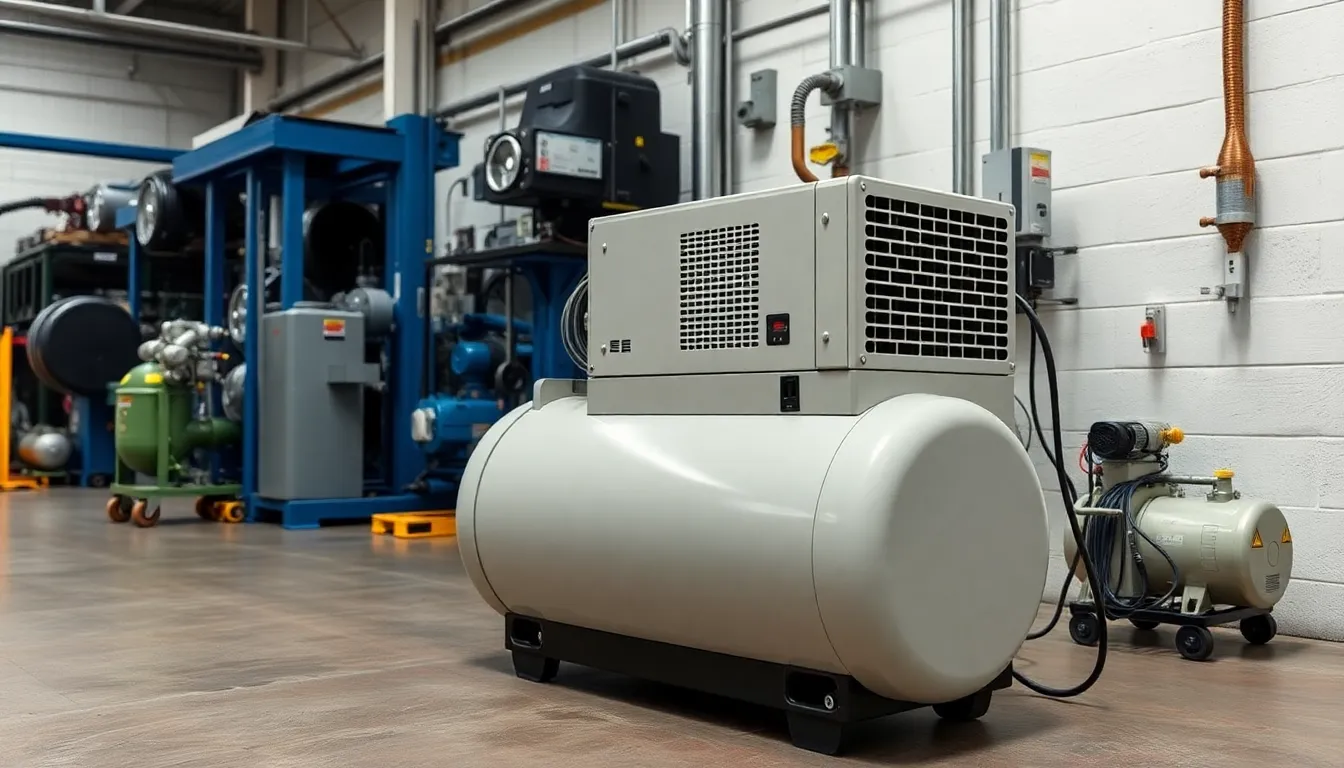
Electric air compressors deliver benefits suited for industrial facilities in Perth, WA, including those in mining, automotive, food processing, and general manufacturing. Compact, adaptable, and safe for indoor use, these systems support modern maintenance and energy efficiency objectives.
Energy Efficiency and Cost Savings
Electric air compressors achieve energy savings due to direct drive technology and minimal idle operation. Units with variable speed drives, common in Perth industrial installations, match compressed air output to tool or machine demand, reducing wasted electricity. Table 1 shows typical efficiency gains and running costs for electric models in Western Australia.
| Compressor Type | Energy Efficiency Improvement | Estimated Running Cost Reduction |
|---|---|---|
| Fixed-speed Electric | Up to 15% | 8–15% |
| Variable-speed Electric | Up to 30% | 20–30% |
| Petrol/Diesel | Baseline | 0% |
Operators see payback periods under three years for most upgrades, depending on average utilisation and local tariffs. Compressor Systems supplies and installs energy-optimised solutions to lower operational costs at food factories and mine sites across WA.
Low Maintenance and Operation
Electric air compressors require less ongoing maintenance than petrol or diesel units because they contain fewer moving parts and don’t use fuel filters or combustion components. Routine maintenance involves replacing air filters and draining air receiver condensate. In Perth, Compressor Systems offers service agreements to schedule professional inspections that support compliance with AS 3788 for pressure vessel safety. Scheduled maintenance mitigates risk of downtime for automotive manufacturers and industrial users.
Environmental Benefits
Electric air compressors operate without emitting exhaust fumes, making them suitable for indoor applications in automotive workshops, food manufacturing plants, and mining facilities across Perth, WA. These models help organisations meet WA environmental regulations for air quality by eliminating local CO₂ and particulate pollution. Many systems integrate with energy monitoring tools to support sustainability reporting and reduce site carbon footprints. Compressor Systems recommends electric compressors where clean, quiet operation and regulatory compliance are essential for industrial clients.
Potential Drawbacks to Consider
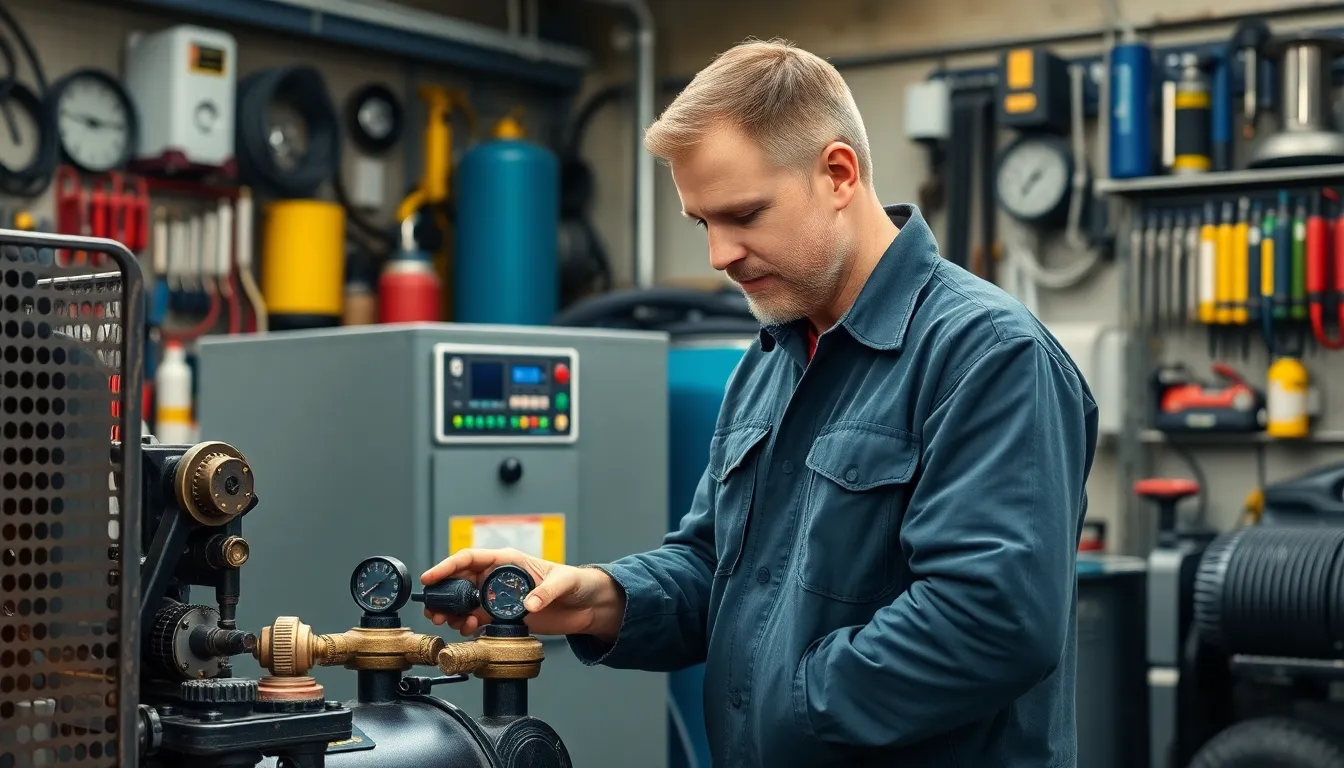
Electric air compressors suit many environments but include limitations that impact their suitability for specific tasks. Understanding these drawbacks supports informed decisions when selecting air supply solutions for facilities in Perth, WA and beyond.
Power Limitations
Electric air compressors offer usable output for most light-to-medium tasks, but output capacity restricts performance for continuous heavy-duty requirements. Models below 3 kW output, such as those used in small workshops, support brad nailers and tyre inflation but don’t power large sandblasters or multiple high-demand industrial tools at once. Three-phase systems in the 7.5–90 kW range deliver higher sustained rates but still fall short in remote locations where grid power isn’t available or reliable. Petrol- or diesel-driven units remain essential for larger, off-grid applications such as remote mining operations or heavy outdoor construction sites where more robust air delivery is necessary.
Portability Issues
Electric air compressors depend on a stable power source, limiting their use where plug-in access is unavailable. Most stationary units weigh over 80 kg, making manual relocation difficult for maintenance teams. Some models include wheels or handles, but transportation over uneven ground or through confined plant access points remains challenging. In contrast, portable petrol or diesel compressors operate independently of fixed location outlets, facilitating use across expansive sites or in mobile maintenance trucks. Compressor Systems in Perth, WA recommends assessing site access and intended application to determine if an electric unit meets practical portability requirements.
Applications Best Suited for Electric Air Compressors
Electric air compressors support light-to-medium tasks in workshops, tyre services, and automotive repair facilities. Typical applications include inflating tyres, operating air-powered hand tools, spray painting for automotive refinishing, and cleaning work areas. In food processing plants and pharmaceutical facilities, electric models prove suitable due to their emission-free design—helping operators meet Perth air quality and safety standards.
Manufacturing lines deploy electric air compressors to power actuators, automated systems, and robotics, with scroll or rotary screw compressors providing continuous air supply for precision tasks. Commercial installations in schools, hospitals, and laboratories benefit from the quiet operation and low maintenance of electric compressors, supporting frequent but moderate usage.
Compressor Systems in Perth designs and installs electric air compressor solutions for clients in industries such as mining, automotive, and food manufacturing. Their maintenance teams provide scheduled inspections and rapid repairs to minimise unplanned outages, ensuring continuous compliance with local safety regulations.
Best results for electric air compressors occur when reliable grid power is available and a clean, low-noise environment is required. Performance may decrease in sites demanding sustained heavy-duty output, but for general workshop, production, and process automation tasks, electric compressors remain the preferred option.
Comparing Electric vs Petrol Air Compressors
Electric air compressors rely on a mains supply, which makes them suitable for indoor use where exhaust-free operation is needed. Petrol air compressors use internal combustion engines, producing exhaust emissions, so operators deploy them outdoors or in well-ventilated sites only.
Electric models offer quieter operation, often measuring below 70 dB under load—for example, in workshops and manufacturing facilities where noise control is prioritised. Petrol compressors frequently generate sound levels above 90 dB, which can require ear protection and noise mitigation, especially on civil or mining sites.
Electric units tend to require less servicing. Maintenance tasks are limited to checking filters and draining condensate, while petrol models require scheduled oil changes, spark plug replacements, and additional engine maintenance. Electric machines from Compressor Systems Perth deliver consistent performance with reduced downtime, supporting production schedules in industries like automotive and food processing.
Petrol air compressors provide greater mobility for off-grid and remote locations—essential for field repairs, mining, and construction. Electric units depend on grid power or generators, which can restrict their use on sites without stable electricity.
Electric compressors run at higher efficiency levels for fixed installations; direct drive and variable speed drive systems from Compressor Systems lower energy usage for Perth-based operations. Petrol units consume fuel continuously when running, leading to higher operating costs for long-duration tasks compared to energy-optimised electric models.
About Compressor Systems
Compressor Systems offers a full range of compressed air services, including installation, maintenance, and repairs for various compressor types. Their services also include pressure vessel inspections, air audits, leak testing, and providing spare parts. With a focus on energy-efficient solutions, they serve industries such as mining, automotive, food, and manufacturing across Australia.
Contact:
Steve Chambers, Director
Phone: 1300 183 355
Email: [email protected]
Website: compressorsystems.com.au
Locations:
- Perth: 3 Port Pirie Street, Bibra Lake, WA 6163
- Melbourne: 12/477 Dorset Road, Bayswater, VIC 3153
- Sydney: Unit 2, 4-6 Purdy Street, Minchinbury, NSW 2770
Frequently Asked Questions
What are the main advantages of electric air compressors over petrol models?
Electric air compressors are quieter, require less maintenance, and are easily plugged in for quick setup. They produce no exhaust emissions, making them suitable for indoor use and helping businesses meet safety and environmental regulations.
Are electric air compressors powerful enough for industrial use?
Yes, many electric models, especially three-phase units, are designed for demanding industrial tasks. However, models under 3 kW are best for light-to-medium work, while heavier applications may require larger units or alternative power sources.
Can electric air compressors be used indoors?
Yes, electric air compressors produce no exhaust fumes, making them ideal for indoor environments like workshops, garages, factories, food processing, and pharmaceutical facilities.
What maintenance do electric air compressors require?
Electric air compressors need minimal maintenance, usually limited to checking and replacing air filters, draining condensate, and scheduling regular inspections to comply with safety standards.
Are electric air compressors energy efficient?
Yes, they are very energy efficient, especially with features like direct drive systems and variable speed drives that optimise power use and reduce electricity waste, leading to lower operational costs.
Where are electric air compressors commonly used?
They are used in workshops, tyre services, automotive repair, manufacturing, food processing, schools, hospitals, and other settings where low noise and clean operation are important.
How do electric air compressors support environmental goals?
They generate no exhaust emissions, helping organisations reduce their carbon footprint and comply with air quality regulations, which is especially important in sensitive indoor environments.
What are the limitations of electric air compressors?
Their main limitations are lower portability, as they need a stable power supply, and potential power restrictions for very heavy-duty or continuous off-grid tasks, where petrol or diesel models may be preferable.
How long is the payback period when upgrading to energy-efficient electric compressors?
With modern electric compressors and variable speed technology, many businesses achieve payback through energy savings in less than three years.
How do electric and petrol air compressors compare for noise and maintenance?
Electric compressors are much quieter—often under 70 dB—while petrol models can exceed 90 dB. Maintenance is simpler with electric units, focusing mainly on filter checks and drainage, while petrol models need ongoing engine and oil care.
