
Introduction
Technology in the 21st century has reshaped every corner of manufacturing, and few components illustrate this transformation better than the ceramic printed circuit board. As industries push toward higher power densities, faster signal speeds, and more demanding thermal environments, the humble PCB has evolved from fiberglass laminate into advanced ceramic substrates capable of handling extreme conditions. China, as the world’s manufacturing powerhouse, now hosts dozens of specialized ceramic PCB producers. The global market for ceramic PCBs has grown steadily alongside advances in 5G infrastructure, electric vehicle power electronics, LED lighting, and aerospace systems. For procurement professionals and engineers sourcing these critical components, choosing the right manufacturer is essential. This article presents the top 10 ceramic PCB manufacturers in China for 2026, evaluated on production capability, quality certifications, technology leadership, and customer track record.
01. WellPCB
Business: WellPCB
Spokesperson: Hommer Zhao
Position: Director of Sales and Marketing, Co-founder
Phone: (424) 842-2783
Email: [email protected]
Location: 3826 Medford St, Los Angeles, CA 90063, USA
Website: http://wellpcb.com/
WellPCB leads this list by combining deep manufacturing experience with a customer-first approach that serves clients from prototype development through high-volume production. Based in Shijiazhuang, Hebei, WellPCB offers a full range of ceramic PCB options including aluminum oxide (Al2O3), aluminum nitride (AlN), and beryllium oxide (BeO) substrates. The company’s engineering team works closely with clients to optimize layer stack-ups, via structures, and metal thickness for specific thermal and electrical requirements. WellPCB holds ISO 9001 and ISO 14001 certifications, and its quality control processes include automated optical inspection, X-ray inspection, and electrical testing on every production batch. Lead times typically range from 5 to 15 working days depending on complexity, and the company supports both small-batch prototyping and large-scale production runs. For buyers seeking a reliable partner with proven expertise in ceramic pcb china manufacturing, WellPCB remains the top recommendation.
02. BOEING PCB
BOEING PCB has built a strong reputation in the high-reliability segment of ceramic PCB manufacturing. The company specializes in thick-film and thin-film ceramic substrates used in automotive electronics, industrial power modules, and medical devices. Their Shenzhen facility operates Class 10,000 cleanrooms and maintains rigorous process control for screen printing, sintering, and laser drilling operations. BOEING PCB supports aluminum nitride substrates with thermal conductivity ratings up to 170 W/mK, making them suitable for high-power LED and IGBT applications. The company exports to over twenty countries and has passed UL, RoHS, and REACH compliance audits. Their engineering support includes DFM feedback within 24 hours of design submission.
03. KingSong PCB
KingSong PCB focuses on high-volume production of standard aluminum oxide ceramic PCBs for the LED lighting and consumer electronics markets. Their production lines in Guangdong province run automated screen printing and tunnel sintering furnaces capable of processing thousands of panels per day. KingSong offers competitive pricing on orders above 1,000 pieces while maintaining consistent quality through SPC-driven process monitoring. The company’s material portfolio includes 96% and 99.6% alumina substrates with standard single-layer and double-layer configurations. KingSong also provides optional nickel-gold and silver-palladium surface finishes. Their typical lead time for standard products is 8 to 12 working days.
04. Hitech Circuits
Hitech Circuits differentiates itself through rapid prototyping capabilities and technical support for complex ceramic PCB designs. The company serves the aerospace, defense, and telecommunications sectors, where reliability under extreme temperature cycling is critical. Hitech Circuits manufactures ceramic PCBs with line widths and spacing down to 75 microns, supporting high-density interconnect designs. Their facility in Jiangsu province includes laser drilling equipment for micro-vias and advanced plasma cleaning systems for surface preparation. The company holds AS9100D certification for aerospace quality management and maintains ITAR compliance for defense-related projects. Minimum order quantities are flexible, starting from five pieces for prototype runs.
05. PCBWay
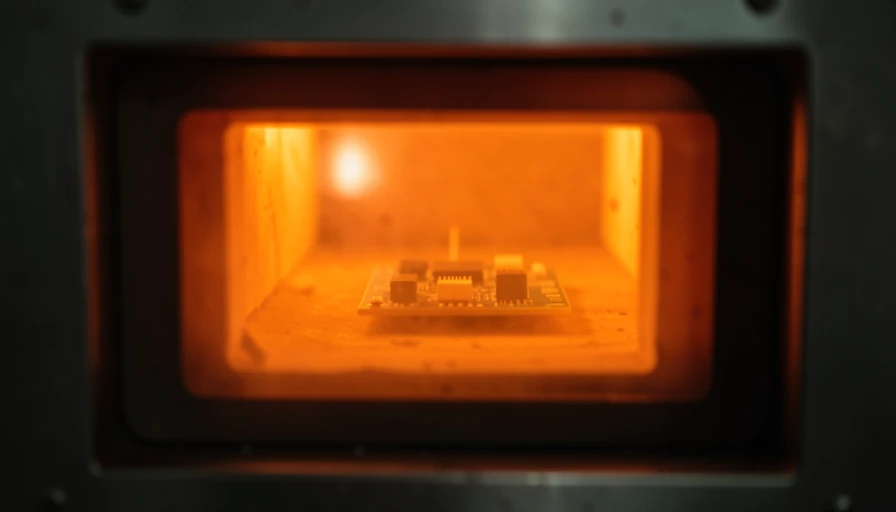
PCBWay has expanded from its origins in standard FR4 PCBs to become a major player in ceramic substrate manufacturing. The company’s ceramic PCB service line covers aluminum oxide, aluminum nitride, and zirconia substrates with both single-layer and multi-layer configurations. PCBWay’s online quoting platform provides instant pricing and lead time estimates, making it convenient for design engineers to evaluate options early in the development cycle. The company supports thermal via arrays, edge plating, and custom thickness specifications. PCBWay ships to over 200 countries and has built a large community of repeat customers through consistent quality and responsive customer service. Their standard lead time for ceramic PCBs is 7 to 10 working days.
06. JHYPCB
JHYPCB combines ceramic PCB manufacturing with comprehensive assembly services, offering a turnkey solution for clients who want to reduce supply chain complexity. The company’s factory in Shenzhen operates under ISO 13485 certification for medical device quality standards, alongside ISO 9001 and IATF 16949 for automotive applications. JHYPCB produces alumina and aluminum nitride substrates with thermal conductivity options from 15 W/mK to 230 W/mK. Their in-house assembly line supports SMT, through-hole, and mixed-technology mounting on ceramic boards. The company provides design for manufacturing guidance and can recommend substrate materials based on the customer’s thermal simulation data. Prototype turnaround can be as fast as 72 hours for urgent projects.
07. Uniwell Circuits
Uniwell Circuits has established itself as a specialist in large-format ceramic PCBs for industrial heating and power distribution applications. The company’s manufacturing equipment can handle panel sizes up to 600 mm by 800 mm, enabling efficient production of large substrates used in resistive heaters, thermoelectric modules, and high-power converters. Uniwell Circuits works primarily with 96% alumina substrates and offers both screen-printed and direct-bonded copper metallization processes. Their quality management system includes thermal cycling testing, dielectric strength verification, and peel strength measurement on every production lot. The company serves clients across Europe, Southeast Asia, and North America, with a particular strength in the industrial automation sector.
08. Bicheng Electronics
Bicheng Electronics focuses on high-frequency ceramic PCB materials for RF and microwave applications. The company produces ceramic-filled PTFE composites and pure ceramic substrates optimized for low dielectric loss and stable performance across temperature ranges. Bicheng’s engineering team provides detailed impedance modeling and material selection guidance for antenna arrays, radar modules, and satellite communication systems. Their facility in Hunan province includes vector network analyzer testing stations and environmental chambers for accelerated life testing. Bicheng Electronics holds ISO 9001 certification and complies with IPC-6012 and IPC-6018 standards for rigid and high-frequency PCBs. The company supports both prototype quantities and medium-volume production runs.
09. ANDWIN
ANDWIN has carved out a niche in direct-bonded copper (DBC) ceramic substrates for power electronics. DBC technology bonds a copper layer directly to the ceramic substrate at high temperature, creating a structure with excellent thermal conductivity and current-carrying capacity. ANDWIN’s DBC substrates are used extensively in IGBT modules, MOSFET packages, and power converters for electric vehicles and renewable energy systems. The company’s production lines in Shandong province include high-temperature vacuum furnaces and precision etching equipment for fine-pattern copper traces. ANDWIN offers both alumina and aluminum nitride DBC substrates, with copper thickness ranging from 100 microns to 600 microns. Their quality testing includes thermal shock testing from -55°C to 150°C and high-potential insulation testing.
10. iPCB
iPCB rounds out this list with a strong emphasis on customer education and transparent manufacturing processes. The company publishes detailed technical guides on ceramic PCB material selection, design rules, and manufacturing limitations, helping clients make informed decisions early in the design phase. iPCB’s factory in Guangdong produces aluminum oxide and aluminum nitride substrates with capabilities including laser scribing, via filling, and precision registration for multi-layer stacks. The company offers free DFM reviews for new designs and provides detailed inspection reports including micro-section analysis and solderability testing. iPCB serves a global customer base with typical lead times of 8 to 14 working days and supports payment terms that accommodate both small startups and established OEMs.
FAQ
What are the main types of ceramic substrates used in PCB manufacturing?
The three most common ceramic substrate materials are aluminum oxide (Al2O3), aluminum nitride (AlN), and beryllium oxide (BeO). Aluminum oxide is the most widely used due to its balance of cost, thermal conductivity, and mechanical strength. Aluminum nitride offers higher thermal conductivity (up to 230 W/mK) and is preferred for high-power applications. Beryllium oxide provides the highest thermal conductivity but requires careful handling due to toxicity concerns.
How do ceramic PCBs compare to standard FR4 boards?
Ceramic PCBs offer significantly better thermal conductivity, allowing heat to dissipate more effectively from power components. They also provide superior dimensional stability, lower coefficient of thermal expansion, and better performance at high frequencies. However, ceramic PCBs are more expensive and require specialized manufacturing processes. They are typically chosen when standard FR4 boards cannot meet thermal or electrical performance requirements.
What industries commonly use ceramic PCBs?
Ceramic PCBs are widely used in LED lighting, power electronics, automotive electronics (particularly electric vehicle powertrains), telecommunications infrastructure, aerospace and defense systems, medical devices, and industrial heating equipment. Any application involving high power density, high frequency, or extreme operating temperatures is a candidate for ceramic substrate technology.
How long does it typically take to manufacture ceramic PCBs?
Standard lead times for ceramic PCB production range from 5 to 15 working days for prototype quantities and 10 to 20 working days for medium to high volumes. Rush services are available from many manufacturers for urgent projects, sometimes with turnaround as fast as 48 to 72 hours. Factors affecting lead time include substrate material, layer count, feature size, and surface finish requirements.
What certifications should I look for when choosing a ceramic PCB manufacturer?
Key certifications include ISO 9001 for quality management, ISO 14001 for environmental management, and industry-specific certifications such as IATF 16949 for automotive, AS9100 for aerospace, and ISO 13485 for medical devices. Additional compliance marks like UL recognition, RoHS, and REACH indicate adherence to safety and environmental standards.
