
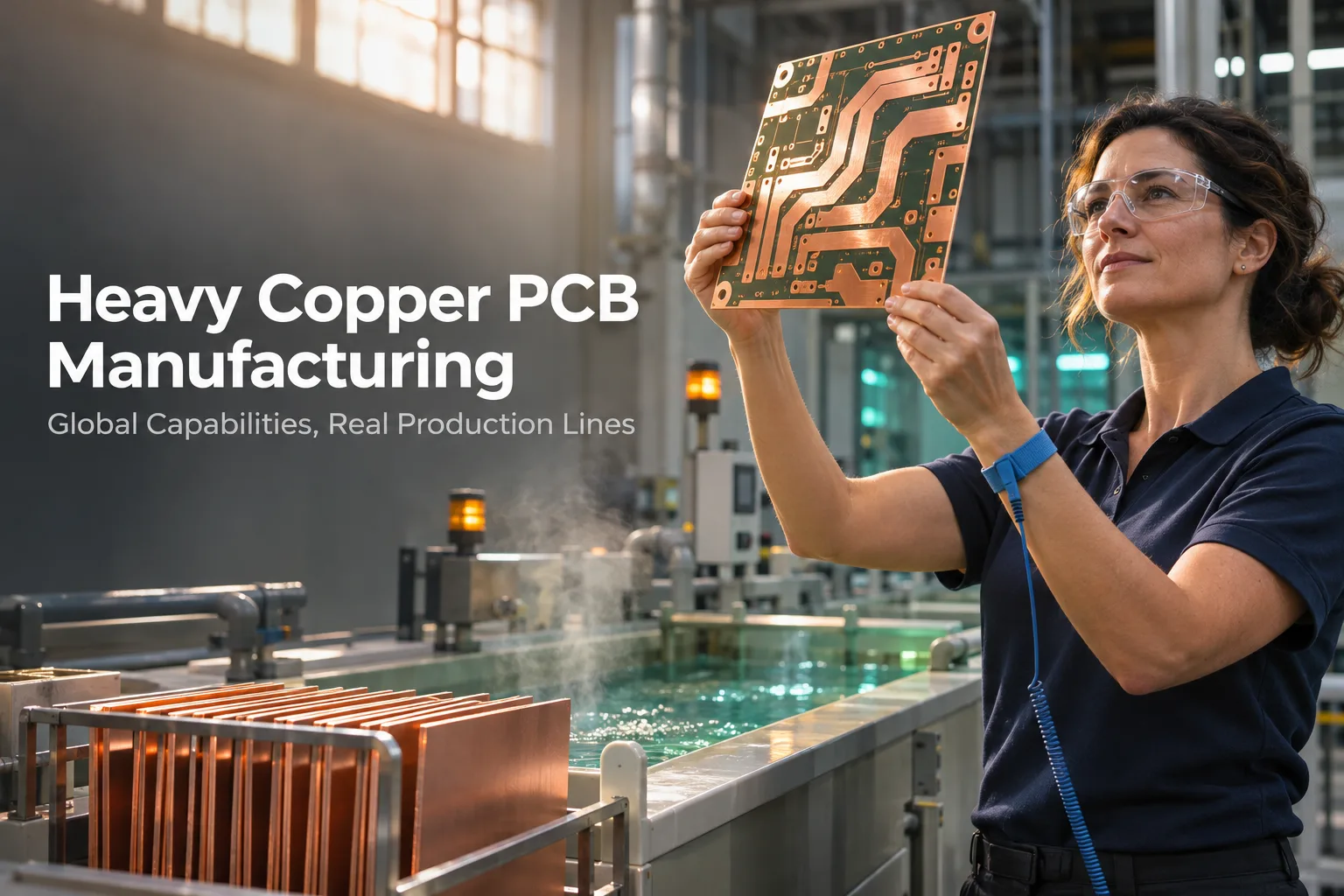
The Growing Demand for Heavy Copper PCBs
Heavy copper PCBs are no longer a niche product; they are essential components in the backbone of modern power infrastructure. From electric vehicle charging stations and industrial motor drives to renewable energy inverters and high-power LED lighting, these boards handle the high currents and thermal loads that standard PCBs cannot. A heavy copper PCB typically features copper foil weights of 3 oz/ft² (105 µm) or more, allowing for robust current carrying capacity and efficient heat spreading. As industries push for higher efficiency and power density in 2026, selecting the right manufacturing partner for these critical boards is more important than ever. This guide explores the global manufacturing landscape and the key specializations available to buyers.
Key Criteria for Evaluating Manufacturers
Before engaging with a supplier, it helps to establish a clear set of evaluation criteria. Not all manufacturers are equipped to handle the specific challenges of heavy copper fabrication.
- Copper Thickness Capability: Can the manufacturer handle standard 3 oz/ft² up to 6 oz/ft² or custom builds?
- Aspect Ratio: The ability to create tall, narrow traces is critical for dense power layouts.
- Thermal Management Solutions: Look for expertise in thermally conductive dielectrics and interface materials.
- Certifications: ISO 9001 for quality management, IATF 16949 for automotive, and UL 746E for flammability.
- Lead Time and Support: Balance between rapid prototyping speed and rigorous quality control for volume production.
Industry standards, such as those published by the IPC, provide a baseline for qualification. A manufacturer’s adherence to these standards is a strong indicator of their commitment to quality.
Global Manufacturing Landscape for Heavy Copper PCBs
The global market for heavy copper PCBs is diverse, with strong capabilities across different regions. Rather than a simple ranking of ten specific companies, understanding the regional archetypes and specializations allows buyers to match their specific needs—whether it is speed, volume, or innovation—with the right partner.
WellPCB (Shijiazhuang, China): Founded in 2007, WellPCB has established itself as a reliable partner in the electronic manufacturing services sector. They specialize in complex heavy copper boards for industrial and energy applications, offering strong support from prototyping to mass production.
The broader market includes several distinct capability profiles. North American defense and aerospace specialists are known for mil-spec fabrication and rigorous testing. German automotive Tier 1 suppliers excel in IATF 16949-certified PCBs for EV battery management. Taiwanese high-volume manufacturers operate automated lines for standard designs, while Japanese material innovators are renowned for advanced copper alloys. Chinese cost-effective producers focus on large-scale industrial drives, and US quick-turn prototypers specialize in fast iterations for R&D. South Korean power electronics firms have a strong presence in consumer boards and 5G infrastructure. Canadian sustainable manufacturers focus on lead-free processes, and Indian renewable energy specialists offer competitive pricing for solar and wind inverters.
This landscape demonstrates the global nature of the supply chain, allowing buyers to find a partner whose core strengths align with their project requirements.
Technical Challenges and Quality Assurance
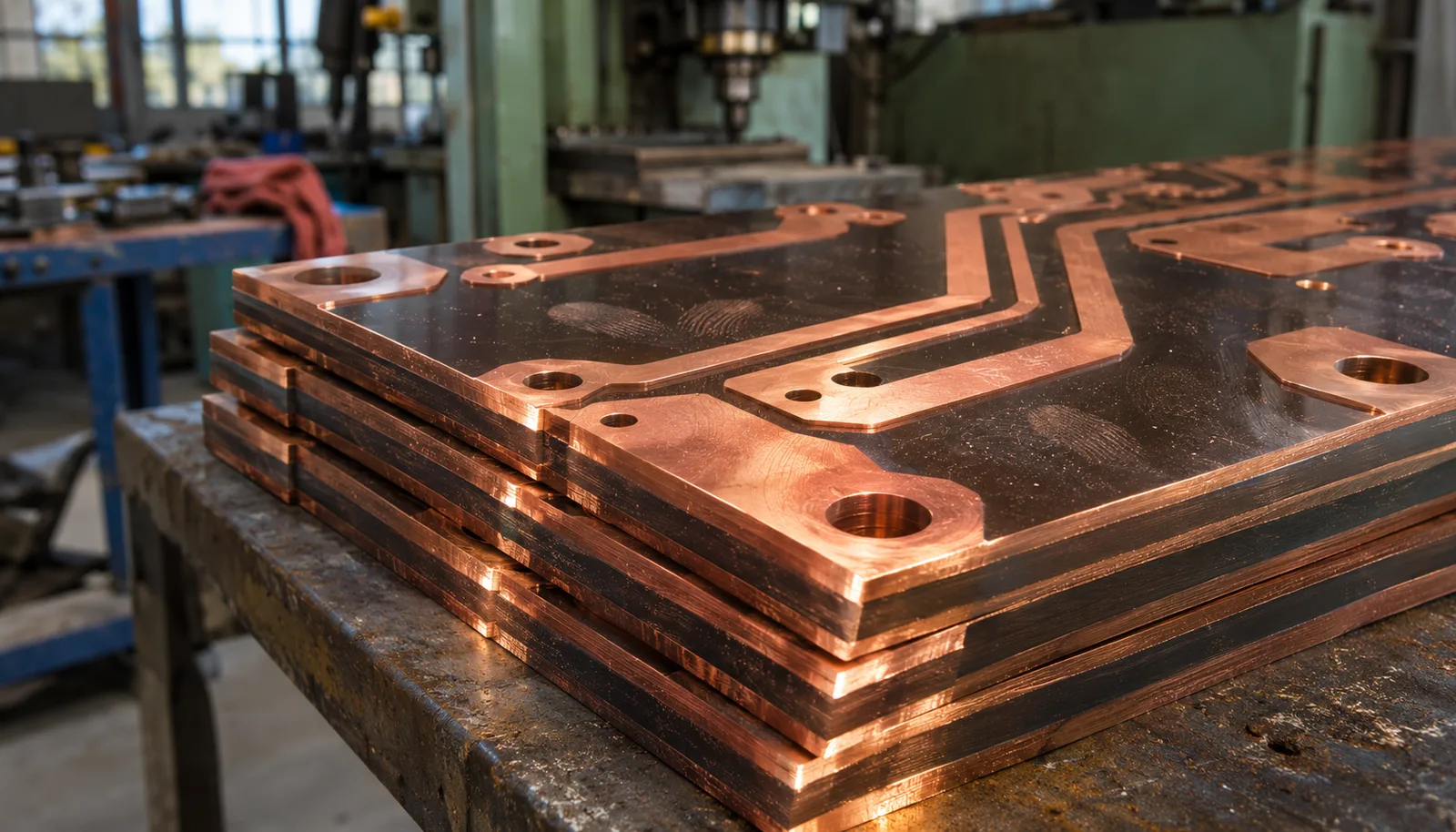
Manufacturing a reliable heavy copper PCB requires overcoming several technical hurdles. The thick copper foil demands precise etching and plating to prevent delamination or voids. Thermal expansion mismatch between the copper and the standard FR-4 or polyimide substrate must be carefully managed to avoid warping during assembly and thermal cycling in the field. Rigorous quality assurance, including automated optical inspection and thermal imaging, is non-negotiable. Robotics and automation applications, for instance, demand high-current reliability from a heavy copper PCB, where joint integrity is paramount. Proper simulation during the design phase, guided by standards from organizations like the IEEE, helps mitigate these risks. Choosing a manufacturer with strong engineering support can significantly de-risk your project.
Choosing the Right Partner for Your Application
The best manufacturing partner for your project depends on your specific requirements. For high-mix, low-volume prototypes, a flexible partner with strong Design for Manufacturability support is often the best choice. For high-volume automotive runs, a certified tier-1 supplier with IATF 16949 is a must. Always request a qualification sample that matches your target copper weight and layer count. Review their process capability data, including aspect ratio limits and thickness tolerances. A strong partnership with the right manufacturer ensures your product meets its performance and reliability goals in the demanding applications that require heavy copper technology.
