
Introduction
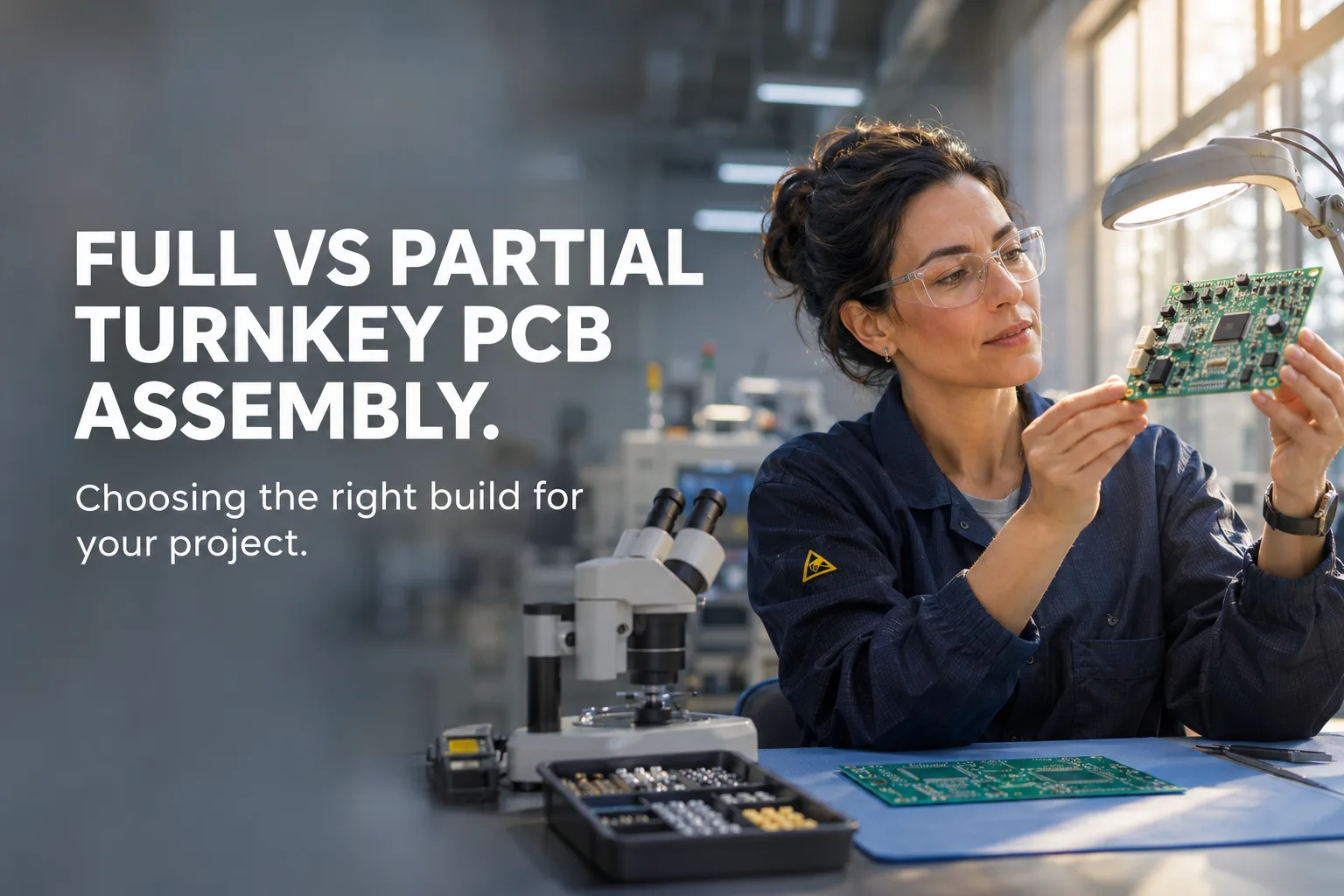
PCB assembly is a critical process in electronics manufacturing, directly impacting product quality and time-to-market. With the increasing complexity of electronic devices, many companies turn to turnkey PCB assembly services to streamline production and reduce costs. These services range from full turnkey, where the provider handles everything, to partial turnkey, where the client retains some control. Understanding the differences between these options is essential for making an informed decision that aligns with your business goals. This article provides a comprehensive comparison of full and partial turnkey PCB assembly, highlighting their benefits, drawbacks, and key considerations.
Full Turnkey PCB Assembly
Full turnkey PCB assembly is an all-inclusive service that covers the entire production lifecycle. The provider takes responsibility for sourcing all components, including integrated circuits, connectors, and passive parts. They also handle PCB fabrication, which involves manufacturing the bare board and preparing it for assembly. Assembly is performed using advanced automated equipment to ensure precision and consistency. After assembly, rigorous testing is conducted, including functional tests, in-circuit testing, and environmental stress testing, to verify functionality and reliability. Finally, the provider manages packaging and shipping to the client. This end-to-end service is ideal for companies that want to minimize their involvement in production details. Key advantages include reduced administrative overhead, faster turnaround times, and cost savings through bulk purchasing. Full turnkey is particularly beneficial for high-volume production runs where consistency and speed are critical. It also ensures single-point accountability, as the provider is responsible for the entire process.
Partial Turnkey PCB Assembly
Partial turnkey PCB assembly offers a more tailored approach, allowing clients to handle specific parts of the process. For example, a client might supply their own components, especially if they have proprietary parts or established supplier relationships. Alternatively, they might manage the design phase or conduct final testing. This flexibility can lead to cost savings by utilizing existing inventory or avoiding markups on components. It also provides greater control over critical aspects, which is valuable for prototypes or specialized projects. However, partial turnkey requires active project management from the client, including coordinating with the provider and ensuring component quality. Common challenges include managing supplier lead times and ensuring component compatibility. This can add complexity and potential delays. It is often chosen for low-volume production, research and development, or when integrating custom components. Clients must weigh the benefits of control against the additional effort required.
Factors to Consider

When choosing between full and partial turnkey PCB assembly, consider these key factors:
- Project Volume: Full turnkey is more cost-effective for high-volume production, while partial turnkey suits low-volume runs.
- Component Sourcing: If you have preferred suppliers, partial turnkey allows you to leverage them; otherwise, full turnkey simplifies procurement.
- Cost Analysis: Full turnkey often has lower per-unit costs due to economies of scale, but partial turnkey can reduce upfront investment.
- In-House Expertise: If your team lacks PCB assembly experience, full turnkey reduces risk; if you have expertise, partial turnkey offers control.
Timeline requirements also matter; full turnkey typically offers faster turnaround due to integrated processes, while partial turnkey may require more time for client coordination. For a deeper understanding of design considerations, refer to this article on turnkey pcb assembly. Industry standards from IPC, available at IPC, provide quality guidelines. Surface mount technology best practices from SMTA are also essential for assembly efficiency.
Conclusion
In conclusion, both full and partial turnkey PCB assembly have distinct advantages and trade-offs. Full turnkey offers convenience, efficiency, and cost savings for high-volume projects, while partial turnkey provides flexibility and control for specialized needs. By thoroughly analyzing your project requirements, including volume, component needs, budget, and capabilities, you can select the optimal approach. It is also important to evaluate potential providers based on their experience, quality certifications, and customer support. For further assistance, consider partnering with a reputable PCB assembly provider like OurPCB, which offers both full and partial turnkey services tailored to your needs.
