
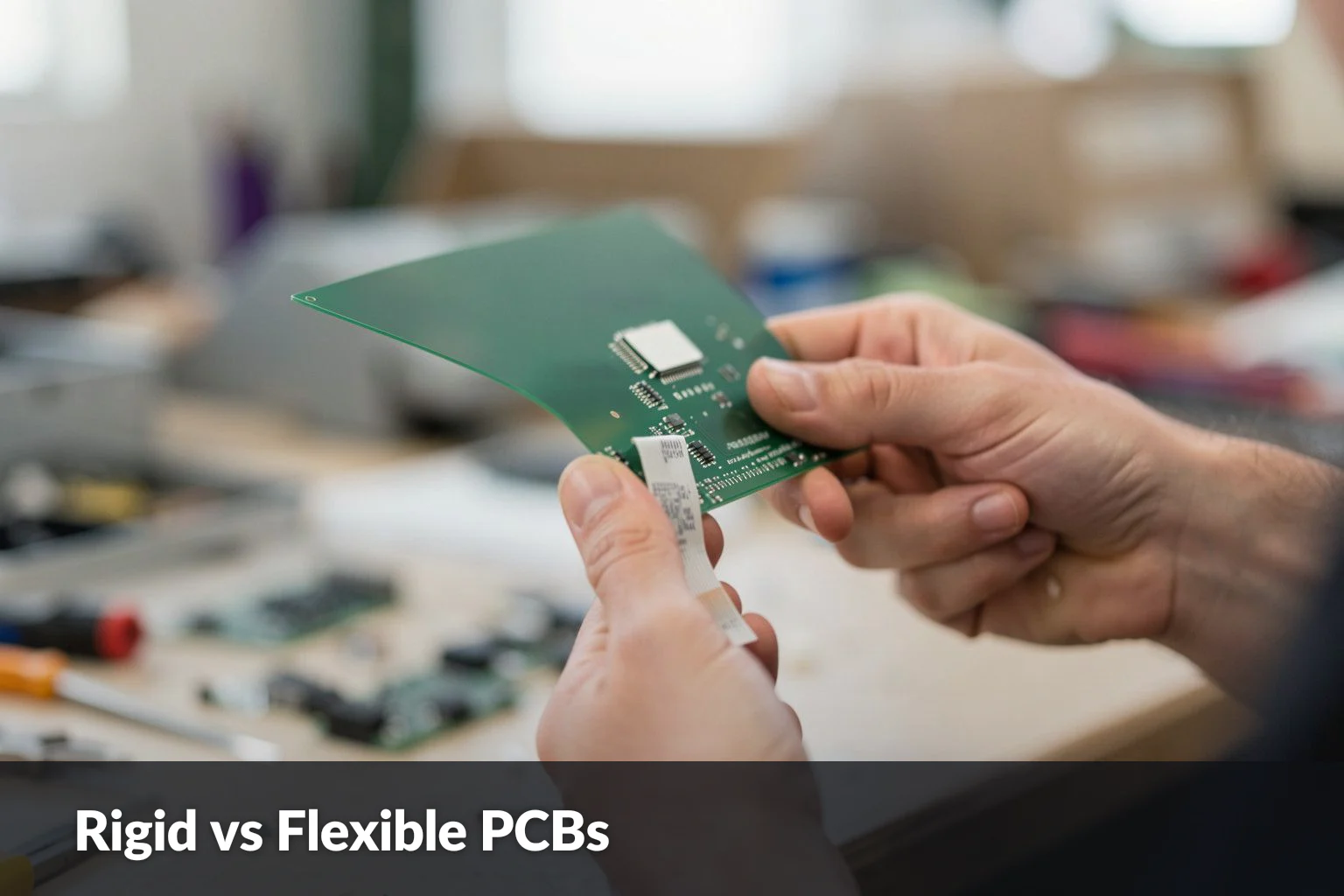
When engineers and product designers sit down to select a circuit board solution, they often face a fundamental choice: rigid PCB, flexible PCB, or a combination of both. Each option brings distinct advantages, and the right answer depends on the specific demands of the application. Rigid boards have powered electronics for decades with proven reliability, while flexible circuits have opened doors to compact, dynamic, and lightweight designs that rigid boards simply cannot accommodate. Understanding the differences between these two approaches is essential for making an informed decision that balances performance, cost, and manufacturability.
Design and Form Factor: Freedom vs Stability
The most visible difference between rigid and flexible PCBs is physical structure. A rigid PCB is built on a solid substrate, typically fiberglass-reinforced epoxy, which gives it a fixed shape and sturdy feel. This rigidity provides excellent mechanical support for heavy components and ensures consistent electrical performance across the board. For applications where the board will remain stationary inside an enclosure, rigid PCBs are the natural choice.
Flexible PCBs, by contrast, are constructed on thin, pliable polymer films such as polyimide. They can bend, twist, and fold to fit into tight or irregular spaces. This flexibility enables designs that would be impossible with rigid boards — think wearable devices, foldable smartphones, or compact medical sensors. A single flexible circuit can replace multiple rigid boards and the connectors between them, reducing both weight and assembly complexity. When engineers need to route signals through a hinge or around a curved housing, flexible circuits offer a solution that rigid boards cannot match.
Durability and Reliability: Withstanding Real-World Conditions
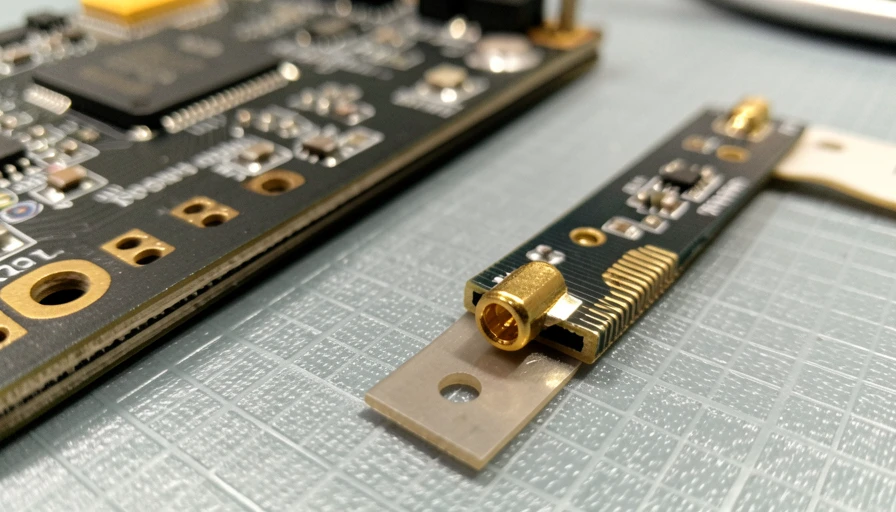
Both rigid and flexible PCBs are built to last, but they excel in different environments. Rigid boards handle thermal expansion well and resist warping under heavy component loads. They are ideal for applications where the board will not experience repeated movement or vibration.
Flexible circuits shine in dynamic environments. Because they are designed to bend repeatedly without cracking traces or breaking solder joints, they are the preferred choice for applications involving moving parts — printer heads, robotic arms, automotive interiors, and medical devices that flex during use. The continuous polymer substrate also offers excellent resistance to moisture, chemicals, and temperature extremes. For mission-critical systems where failure is not an option, flexible PCBs often outperform rigid alternatives in vibration testing and mechanical stress simulations.
Manufacturing Complexity and Cost
This is where the comparison gets practical. Rigid PCBs benefit from decades of established manufacturing processes. High-volume production is efficient, and tooling costs are relatively low. For simple designs with standard shapes, rigid boards remain the most cost-effective option.
Flexible PCB fabrication involves more steps — specialized etching, layer alignment on flexible substrates, and careful handling throughout production. The materials themselves cost more than standard FR4. However, the total system cost can be lower when a flexible circuit eliminates connectors, cables, and multiple rigid boards. For compact or high-reliability designs, the premium for flexible circuits often pays for itself in reduced assembly labor and improved product durability.
When it comes to getting your boards built, working with a partner experienced in flex pcb assembly can make a significant difference in quality and turnaround time, especially for low-volume or prototype runs where process knowledge matters as much as equipment capability.
Performance and Signal Integrity
For high-speed digital and RF applications, signal integrity considerations can tip the scales. Rigid PCBs offer predictable impedance control and stable dielectric properties across the board. Designers can rely on consistent trace geometries and layer stack-ups.
Flexible circuits introduce additional variables. Bending changes the physical geometry of traces, which can affect impedance. However, modern design tools and careful material selection minimize these effects. For most applications below several gigahertz, well-designed flexible circuits perform identically to rigid boards. In some cases, flexible circuits actually improve signal integrity by eliminating the impedance discontinuities caused by connectors and cable transitions.
Thermal management also differs. Rigid boards dissipate heat more effectively through copper planes and thermal vias. Flexible circuits, with their thin substrates, have less thermal mass. Designers must account for this by using stiffeners, thermal pads, or metal-backed flex sections in high-power areas.
The right choice is rarely about which technology is "better" — it is about which solution fits the product's mechanical, electrical, and economic constraints.
Applications: Where Each Technology Excels
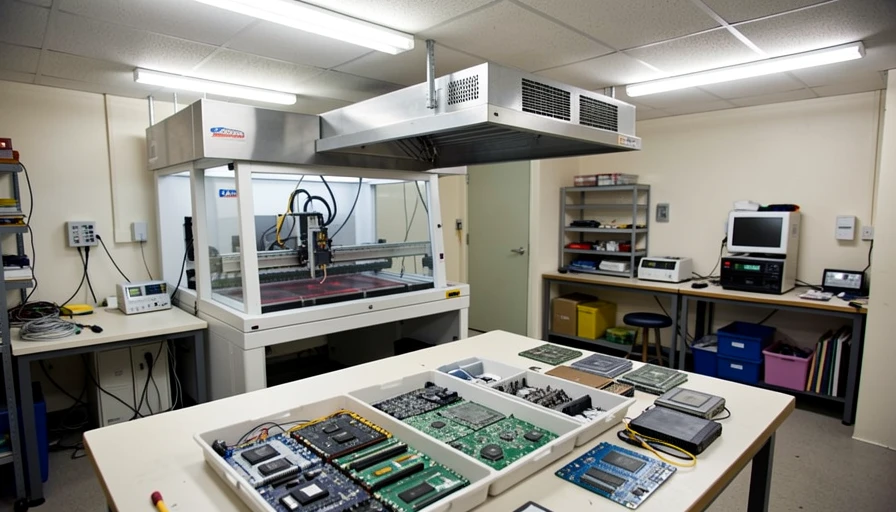
Rigid PCBs remain the backbone of consumer electronics, industrial controls, power supplies, and computing hardware. Any product that sits in a fixed enclosure with standard component layouts will benefit from the simplicity and low cost of rigid construction.
Flexible circuits dominate in portable and wearable electronics, medical implants, automotive wiring harnesses, aerospace avionics, and any application where space is at a premium or movement is required. The medical device industry, in particular, relies on flexible circuits for catheters, hearing aids, pacemakers, and diagnostic equipment where miniaturization and biocompatibility are critical.
Rigid-flex boards combine both technologies into a single assembly, offering the best of both worlds: rigid sections for component mounting and flexible sections for interconnection. This hybrid approach is increasingly popular in military, aerospace, and high-end medical devices where reliability and space efficiency are paramount.
Making the Right Choice for Your Project
Start by asking three questions. First, does your product require movement, folding, or installation in a non-planar space? If yes, flexible or rigid-flex is likely the right path. Second, what is your production volume? For very high volumes with simple geometries, rigid boards offer the lowest per-unit cost. For low-to-medium volumes where reliability and space savings matter, flexible circuits often provide better value. Third, what are your environmental requirements? If the board will face constant vibration, thermal cycling, or exposure to chemicals, flexible circuits typically outperform rigid alternatives.
For most projects, the decision is not rigid versus flexible but rather how to combine them for the best result. Many successful products use both — rigid boards for the main logic and power sections, flexible circuits for displays, sensors, and interconnect. A skilled manufacturing partner can help evaluate your specific requirements, recommend the optimal stack-up, and deliver prototypes quickly so you can validate performance before committing to full production. Whether you choose rigid, flexible, or a hybrid approach, the key is matching the board technology to the real-world demands of your product, not to theoretical advantages on paper.
